The incredible entrepreneurial journey that transformed a grandmother’s life savings into America’s largest sporting goods retailer
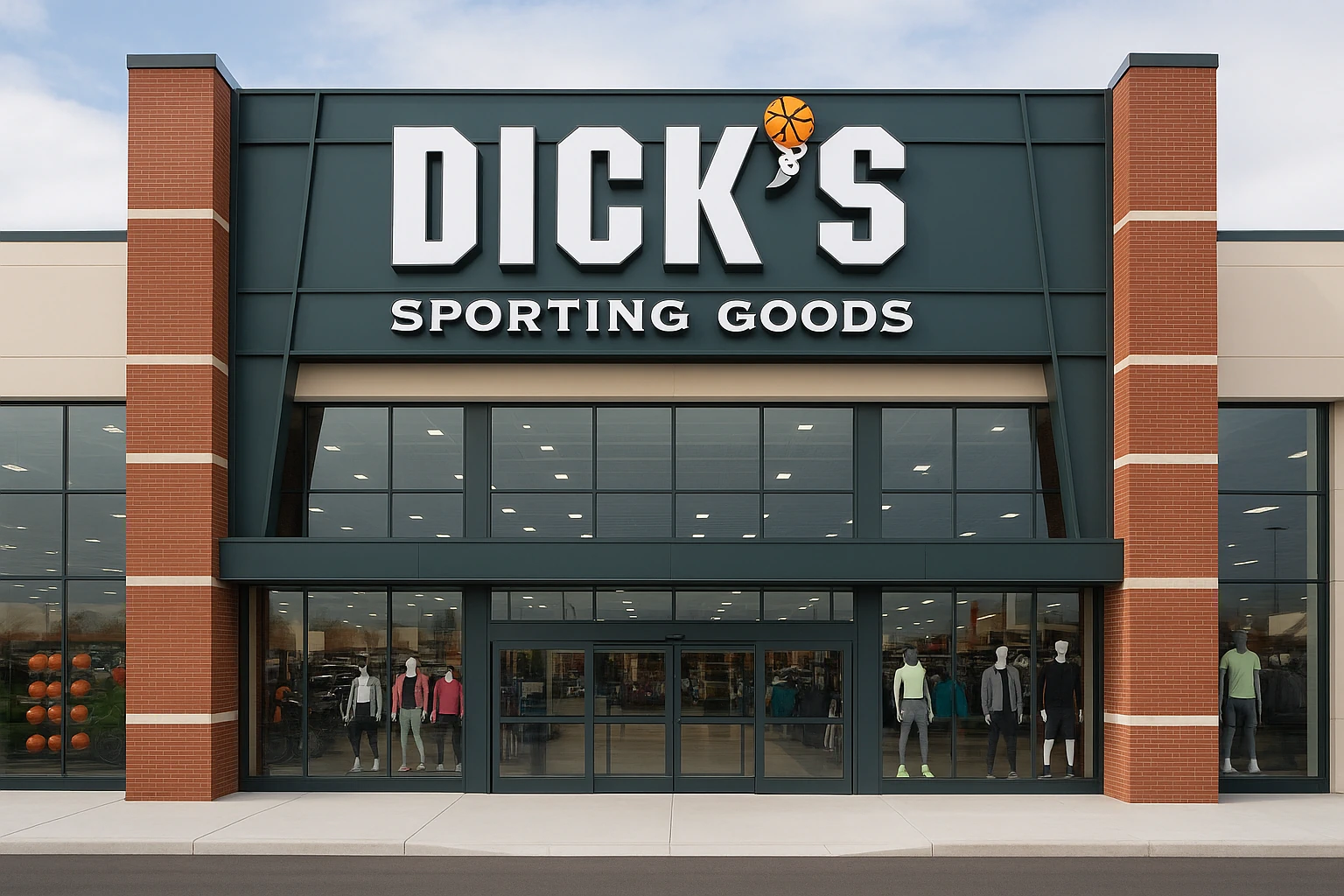
From a tiny bait shop to over 720 stores generating $13.4 billion annually
The Power of Believing When No One Else Will
The story begins with rejection and humiliation. Dick Stack had spent hours creating a detailed inventory list for his boss who wanted to expand into fishing tackle. When the owner dismissed his work and his knowledge, Dick didn’t just lose a job—he discovered something more valuable than any paycheck: the gift of someone believing in you before you believe in yourself.
Most entrepreneurship stories focus on business plans, market research, or innovative products. But Dick’s Sporting Goods started with something far more powerful—unconditional belief. His grandmother didn’t analyze market opportunities or assess Dick’s business acumen. She saw her grandson’s pain, recognized his knowledge of fishing, and made a bet on his character.
That $300 from a cookie jar represents something every entrepreneur needs but few receive: someone who believes in your potential when evidence suggests they shouldn’t. Today, when Dick’s employees reach 25 years with the company, they receive a replica cookie jar with $300 inside—a reminder that belief, not capital, is often the scarcest resource in business.
The early days were brutal. Dick would open at 9 AM, close at 9 PM, and some days take in only $5. His margins were nonexistent because he couldn’t afford wholesale prices. Instead, he’d close the shop, drive 60 miles to Scranton, buy inventory at retail from a drugstore, drive back, and sell it at barely enough markup to cover gas. But he had something more valuable than capital—he had expertise earned through thousands of hours on cold water, and he had his grandmother’s voice in his head telling him he could do this.
When Failure Becomes Your Greatest Teacher
Success has a way of making entrepreneurs overconfident, and Dick Stack was no exception. By 1954, his Court Street store was thriving. So he did what every successful entrepreneur does: he expanded too fast, to the wrong location, for the wrong reasons. The second store at Hillcrest Shopping Center was everything the first store wasn’t—out of the way, in an unproven location, with no foot traffic.
Rather than cutting his losses, Dick made a decision that would haunt him forever: he closed the profitable Court Street location, gambling that customers would follow him to the out-of-the-way shopping center. They didn’t. Within months, he was advertising massive stock reductions. By Christmas 1955, he was practically giving merchandise away. On June 6th, 1956, Dick Stack took out an ad with two words that said everything: “We quit.”
Here’s what separated Dick Stack from countless other failed entrepreneurs: he refused bankruptcy even when everyone expected it. Instead, he sold everything he owned—his house, his car, anything worth a dollar—to pay back every creditor in full. His wife moved in with her parents. Dick moved in with his mother. He kept his word when keeping it cost him everything.
That decision to protect his creditors when he didn’t have to became the foundation of everything that followed. Six weeks after the failure, when Dick walked back into those same supplier offices asking for another chance, they remembered. This wasn’t just another businessman looking for credit—this was the man who protected their interests when his own world was collapsing. Trust isn’t built in good times; it’s forged in the fire of failure.
The comeback began with a stranger’s challenge. While working at Montgomery Ward, a man Dick had never seen before walked up and said, “I knew your father. If you had half the guts your father had, you’d be doing this for yourself.” Two days later, Dick quit. Within six weeks, he’d convinced a bank to back him and his suppliers to trust him again. Dick’s Sporting Goods was reborn.
The Father-Son Battle That Built an Empire
Ed Stack hated everything about his father’s store. From age 13, he spent every summer and weekend in the suffocating warehouse heat while his friends played baseball. His father tested him relentlessly—firing fastballs harder and harder during backyard catch, quizzing him on baseball scenarios at dinner with no tolerance for wrong answers. Ed dreamed of escape through college, then law school, then a corporate career far from Binghamton.
The tension between Dick and Ed wasn’t just personal—it was philosophical. Dick had been scarred by the Hillcrest failure and learned the wrong lessons: don’t expand, don’t change, don’t risk. Ed, working summer jobs at Xerox and Wegmans, could see that his father’s business lacked systems, data, and strategic thinking. Dick flew blind for 12 months at a time, only learning if he’d made money during the annual July inventory count.
Sometimes the thing you’re running from becomes the thing you have to run toward. When Dick’s health failed in 1977, Ed faced a choice: let the business die or take responsibility for something he’d never wanted. Duty doesn’t care what you feel—it only cares what needs to be done.
What shifted everything was Ed’s realization that the store he’d hated as an employee became fascinating as a decision-maker. For the first time, he wasn’t just following orders—he was solving puzzles. Take the ammunition wars with Kmart: when their executive threatened Ed to stop the price competition, Ed played dumb, then sent his brother to buy out Kmart’s entire shotgun slug inventory at their loss-leader prices. When hunting season started and hunters couldn’t find ammo at Kmart, they flocked to Dick’s.
The father-son dynamic created an unexpected strength. Dick’s resistance forced Ed to think through every proposal, analyze every angle, and make his ideas bulletproof. While this was frustrating in the moment, it taught Ed a fundamental truth about retail: the moment you think you’ve figured it out is the moment you start to die. In retail, you’re either getting better or getting worse—there’s no standing still.
Betting on Hunger Over Established Players
For three years, Ed begged Puma and Adidas to let Dick’s carry their shoes. These were the brands every kid wanted, but the answer was always no. In their eyes, Dick’s was just some outdoor store focused on hunting and fishing—not a place for cool sneakers. So Ed did what Dick’s had always done: he gave an unknown company a chance.
Nike was a nobody in 1978. They’d started making basketball shoes, but that was about it. Ed added their running shoes to his inventory, and they flew off the shelves. By 1980, Nike had captured half the U.S. athletic footwear market, and Dick’s rode the wave with them. That’s when Puma finally called back: “Yes, we’ll sell to you.” Ed immediately called Adidas: “Just wanted you to know Puma’s going to sell to us.” After a pause: “Well, if they sell to you, we’ll sell to you.”
The same pattern repeated with Under Armour. When Ed first saw them at a trade show—a tiny booth representing a company no one had heard of—he recognized something others missed. This wasn’t just another shirt; it was a completely new category. Dick’s became one of Under Armour’s first major retail partners, giving them prominent placement when other stores wouldn’t. Both companies rode each other’s growth to billions in revenue.
This wasn’t luck—it was strategy. Established brands had options and could afford to ignore Dick’s. But hungry companies fighting to prove themselves? They needed partners who believed in their potential. The rejection from established players forced Dick’s to bet on unknowns, and those partnerships made both companies billions.
The lesson extends beyond vendor relationships. When the arrogant Adidas rep forced Ed to buy apparel he didn’t want, that unwanted inventory became his most profitable category. Runners didn’t just need shoes—they needed shorts, shirts, socks, and accessories. The margins on sportswear were incredible, often exceeding expensive hunting gear. Sometimes the best opportunities come disguised as demands you don’t want to meet.
The Near-Death Experience That Changed Everything
By 1991, Ed had built Dick’s to 12 stores using Sam Walton’s playbook: grow quietly in concentric circles, stay under the radar, stick to cold weather hunting markets. The strategy was working beautifully until venture capitalists arrived with $6 million and high expectations. “Establish beachheads,” they said. “Get into markets before your competitors do. Figure out the details later.”
The money transformed Dick’s overnight—from opening 3 stores per year to opening 20. But rapid growth without proper systems is a recipe for disaster. They opened enormous 60,000-square-foot stores with fancy floors nobody noticed and expensive fixtures that didn’t drive sales. They expanded into markets they didn’t understand—Cincinnati, Baltimore, Philadelphia—opening three stores per city simultaneously.
In 1996, CFO Mike Hines delivered the words that made Ed physically ill: “We’re going to be out of money next month.” They owed $13 million with no way to pay. Banks wouldn’t restructure without VC investment. VCs wouldn’t invest without bank restructuring. Classic catch-22. When someone suggested bankruptcy, Ed’s response was immediate: “That’s not an option.”
The salvation came from an unexpected source: GE Capital, known for brutal terms but willing to take risks others wouldn’t. In the conference room, suits fired prosecutorial questions at Ed for 90 minutes. But in the back sat a quiet man who hadn’t spoken once. As everyone gathered their papers, this silent observer approached Ed: “Tell me the three things I need to know so we can approve this loan.”
Ed was brutally honest about their mistakes: expanding too fast, into wrong markets, with inadequate systems. “Here’s what we learned. Here’s why it happened. Here’s how we’ll ensure it never happens again.” The man studied Ed for ten seconds, smiled, shook his hand, and said, “We can do that.” GE Capital gave them $140 million, and Dick’s was saved.
The near-death experience taught Ed what Warren Buffett already knew: never count on the kindness of strangers to meet tomorrow’s obligations. Today, Dick’s carries minimal debt despite Wall Street calling their balance sheet “sub-optimal.” Ed’s philosophy is simple: the banks can’t take your business if you don’t owe them money.
When Values Cost More Than Profits
On February 14, 2018, a gunman opened fire at Marjory Stoneman Douglas High School in Parkland, Florida, killing 17 people. Ed Stack, a gun owner and Second Amendment supporter, watched the surviving students speak about the tragedy and felt something shift inside him. When Dick’s discovered the shooter had purchased a shotgun from one of their stores (though not the weapon used in the attack), Ed made a decision that would define his legacy.
Dick’s would permanently remove assault-style rifles from all 850 stores and stop selling guns to anyone under 21, regardless of local laws. The decision cost Dick’s an estimated $250 million annually. Death threats poured in. 65 employees quit immediately. Hunting communities boycotted the stores. But Ed never wavered: when asked if Dick’s would ever reverse the decision, his answer was one word—”Never.”
This wasn’t a marketing stunt or calculated business move—it was a values-based decision that came with enormous costs. But it demonstrated something powerful: when you’re a family business with long-term thinking, you can make decisions that publicly traded companies beholden to quarterly earnings often cannot. Sometimes doing the right thing costs more than doing the profitable thing.
The gun decision revealed the strength of the Stack family’s approach to business. They weren’t just building quarterly profits—they were building a legacy. Ed often tells audiences that being a family business gave him the leeway to make decisions that purely profit-driven companies couldn’t. When your name is on the building and your children will inherit not just assets but reputation, short-term costs matter less than long-term integrity.
Interestingly, Dick’s found that replacing gun shelf space with other merchandise actually made them more money in some locations. The decision attracted new customers who appreciated the company’s stance, particularly families with young athletes. While they lost some hunting customers, they gained others who aligned with their values.
The Modern Empire: Innovation and Growth
Today’s Dick’s Sporting Goods bears little resemblance to that tiny bait shop at 453½ Court Street. The company reported record fourth quarter 2024 results with 6.4% comparable sales growth, marking the largest sales quarter in company history. With $13.44 billion in annual revenue and over 720 stores, Dick’s has become America’s largest sporting goods retailer.
But size isn’t the only measure of success. The company continues to innovate with new formats like House of Sport—massive 100,000-square-foot stores featuring rock climbing walls and running tracks. Dick’s plans to open 16 additional House of Sport locations and 18 Field House locations in 2025. These aren’t just bigger stores; they’re experiential destinations that turn shopping into entertainment.
Dick’s has also embraced technology and youth sports in revolutionary ways. Their GameChanger platform, which helps manage youth sports leagues and teams, surpassed $100 million in revenue in 2024 and is expected to reach $150 million in 2025. This isn’t just selling equipment—it’s becoming essential infrastructure for youth sports nationwide.
The company’s commitment to youth sports extends far beyond profit. When Ed learned that one in five American high schools no longer offered sports due to budget cuts, Dick’s launched the Sports Matter Initiative, committing over $100 million to save youth sports programs. This reflects the same values-driven approach that led to the gun decision—sometimes the most important investments can’t be measured purely in financial returns.
Under CEO Lauren Hobart, the first non-family leader in company history, Dick’s has prioritized e-commerce investments, with online sales jumping 17% to $1.2 billion in recent years. The company successfully navigated the pandemic by pioneering curbside pickup, with nearly 70% of online orders fulfilled directly by stores during lockdowns.
Conclusion: The Cookie Jar Legacy
Dick Stack died in March 1998, dementia having stolen most of his memories. But at his funeral, the procession made a slow loop past the original store at 345 Court Street—a tribute to the man who turned $300 from a cookie jar into something extraordinary. At his death, Dick’s had 51 stores. Today, it operates more than 850 stores with over 55,000 employees.
The real lessons from Dick’s Sporting Goods aren’t found in strategic planning or market analysis. They’re found in the human moments: a grandmother’s belief in her grandson, a father’s refusal to declare bankruptcy, a son’s decision to protect his employees’ futures, a CEO’s choice to sacrifice profits for principles. These weren’t business strategies—they were character decisions that happened to build a business.
At Dick’s headquarters today, the original cookie jar sits in a place of honor. When employees reach 25 years with the company, they receive a replica with $300 tucked inside—a reminder that the most valuable currency in business isn’t capital, it’s belief. Belief in someone before they believe in themselves. Belief that doing the right thing matters more than doing the profitable thing. Belief that how you play the game matters more than the final score.
Join the Conversation
Which of these 11 lessons resonates most with your own business journey? Have you experienced a moment when someone’s belief in you changed everything, or made a costly decision based on values rather than profits?